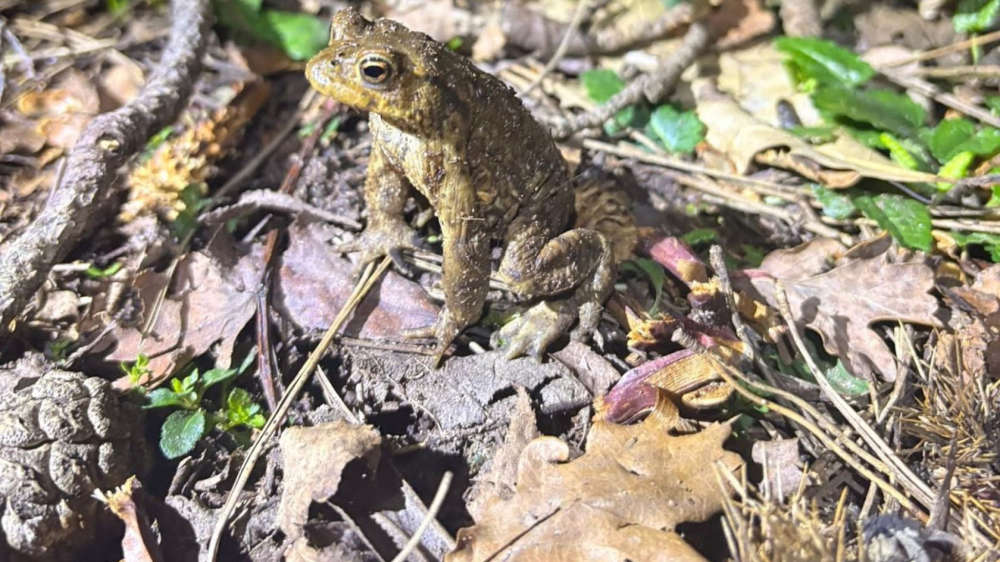
Each year, hundreds of toads journey across woodland paths and village roads, instinctively returning to the ponds where they were born to breed.
It’s a powerful example of nature’s resilience and rhythm - and for those who spot it at dusk, an unforgettable wildlife moment.
At Center Parcs, Conservation Rangers actively monitor migration activity and install temporary signage to alert drivers when peak movement begins. As well as track conditions closely, particularly during mild, rainy evenings when large numbers may move at once – weather-dependent, sometimes over 90% of the total migration occurring over just a few nights.
While the migration is an inspiring wildlife spectacle, it is also a critical conservation moment.
Across the UK, approximately 20 tonnes of toads are killed on roads each year, and even low traffic volumes can significantly impact local populations during peak migration nights.
“This is one of the most important and vulnerable moments in the toad’s lifecycle. They are instinctively returning to the ponds where they were born, which is extraordinary and a real privilege to see this happening within our forests," said Richard Watson, Ecology and Biodiversity Manager at Center Parcs, "However, it is also a time where we ask our guests to drive slowly, remain vigilant on woodland footpaths and roads, and report high levels of toad activity to village colleagues.”
The migration typically takes place from late February through March, triggered by temperatures rising above around 7°C and periods of rainfall.
On warm, damp evenings - particularly after rain - dozens of toads can sometimes be seen steadily making their way toward traditional spawning sites.
Many return to the same pond year after year, navigating by instinct alone.
To find out more, visit: https://corporate.centerparcs.co.uk