
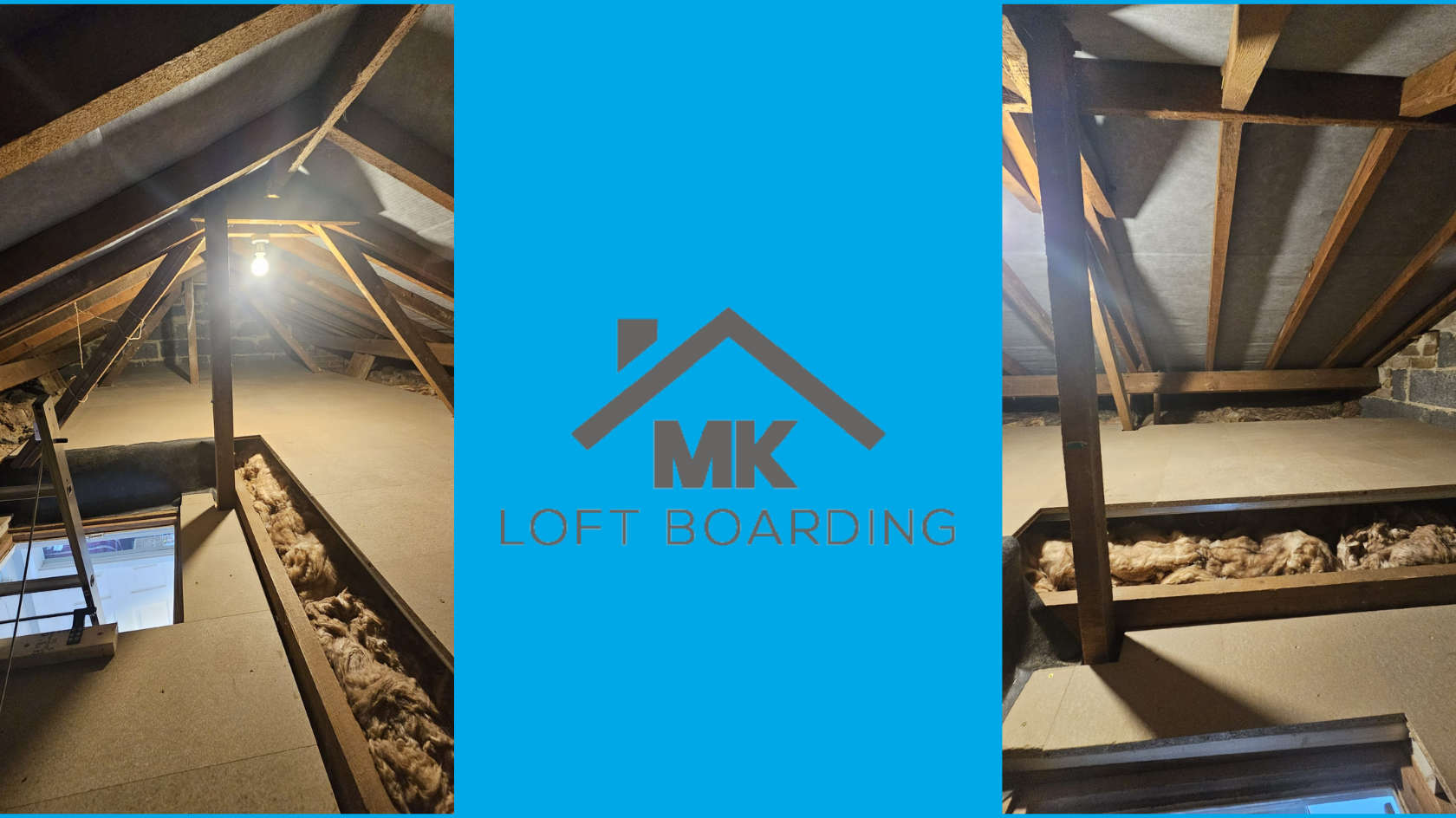
MK Loft Boarding highlights five common loft insulation problems Milton Keynes homeowners should check before winter.
With household energy costs remaining a concern ahead of the winter months, Milton Keynes loft specialists are encouraging local homeowners to check whether poorly fitted or outdated insulation could be affecting their home's energy efficiency.
Loft insulation helps reduce heat loss through the roof, but MK Loft Boarding warns that fitting more material is not always the answer. Gaps, compression, blocked ventilation, and overlooked electrical fittings can all affect how safely and effectively a loft performs.
“Homeowners often assume that any loft insulation is good insulation,” said Ryan Evans, founder of MK Loft Boarding. “In practice, the installation itself matters just as much as the amount. Insulation that has been flattened by boards, pushed into ventilation gaps, or fitted around electrical components incorrectly can undermine its performance and even create further problems down the road.”
Five Loft Insulation Problems to Check Before Winter
To help homeowners understand where their insulation may be falling short ahead of winter, the team at MK Loft Boarding have highlighted five common issues found in lofts across Milton Keynes.
Insulation May Be Too Thin or Uneven
The Energy Saving Trust currently recommends a minimum depth of 270mm for mineral wool loft insulation. Sometimes older homes have a thinner layer fitted only between the ceiling joists, while insulation in other properties may have become uneven after being moved or compressed.
If the material is dry, undamaged, and evenly fitted, it can often be topped up rather than removed. A second layer is normally laid at a right angle across the ceiling joists, helping to cover the timber and reduce cold spots.
The 270mm recommendation applies to mineral wool and is not a universal legal requirement for every loft. Other materials may need different depths, while roof renovations and loft conversions can be subject to separate Building Regulations requirements.
When checking loft insulation, look for exposed joists, shallow areas, gaps between rolls, and insulation that has been moved aside to reach pipes or wiring. If the depth varies significantly, ask a loft insulation specialist whether it can be topped up safely.
Blocked Ventilation Can Contribute to Condensation
Before adding insulation, check the edges of the loft where the roof meets the walls. Mineral wool should not be packed so tightly into the eaves that it blocks existing ventilation paths.
Homeowners should also look for damp insulation, water droplets, mould, musty smells, or staining on the roof timbers. These can indicate a moisture problem, although the cause is not always the insulation itself.
If any of these signs are present, avoid covering the area with more insulation. Ask an experienced loft or roofing professional to investigate the source of the moisture and advise whether the roof needs additional ventilation.
Electrical Fittings Need Careful Treatment
Before topping up loft insulation, note the location of any cables, junction boxes, and downlights. These fittings can be difficult to find once they have been covered.
Insulation can affect a cable's ability to release heat, but homeowners should not assume that every cable needs to be moved above it. The safe arrangement depends on the type of cable, the circuit, and how it was designed.
Downlights should not touch or be covered by insulation unless they are specifically designed and rated for those conditions. If wiring or light fittings are already buried, leave them in place and ask a qualified electrician to check the installation before carrying out further work.
Loft Storage Can Compress Insulation
Installing boards directly over the ceiling joists can squash the insulation below and reduce its thermal performance.
Mineral wool relies partly on air trapped within its fibres. When storage boxes or boards flatten the material, it cannot perform as intended.
Raised loft boarding creates a platform above the insulation instead. This allows the recommended insulation depth to be retained while providing a safer and more practical storage area.
Loft Hatches Can Create Cold Spots
The loft hatch is another area that homeowners frequently overlook.
If the hatch is uninsulated or doesn't close tightly, it can allow warm, moist air to enter the loft. Depending on its design, adding suitable insulation to the back of the hatch and fitting draught-proofing around the frame may help.
Signs That Loft Insulation May Need Attention
Loft insulation problems are not always obvious, but MK Loft Boarding encourages homeowners to be aware of the following four key warning signs:
1. Rising heating bills despite similar energy usage
2. Insulation that appears damp, flattened, or discoloured
3. Visible ceiling joists or mineral wool that appears noticeably shallow
4. Cold spots appearing on upstairs ceilings
If any of these signs are present, the insulation may need topping up, although damp or ventilation problems should be addressed first.
For homeowners unsure about the condition of their loft insulation, MK Loft Boarding offers free loft surveys for homeowners across Milton Keynes, helping them identify whether improvements might be needed and how the space could be better configured for both insulation and storage.